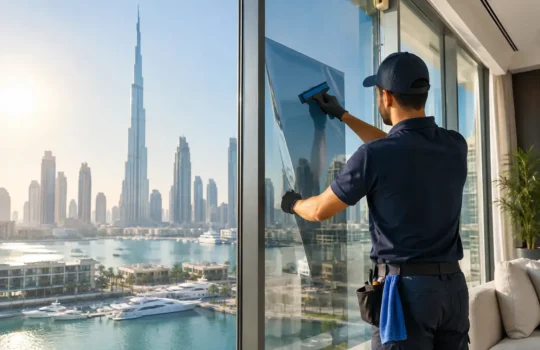

A home office can look bright and impressive at 9 a.m., then become difficult to use by late morning. Direct sun on a desk creates screen glare, hot seating areas, and a room that feels noticeably warmer than the rest of the home. In Dubai villas and apartments with large windows, choosing the best films for home offices is usually less about making the glass dark and more about controlling sunlight without sacrificing the daylight that makes the room pleasant.
The right window film depends on what is actually disrupting your work. Heat, glare, fading, daytime privacy, and an overly exposed view can each call for a different balance of film performance. A professional assessment should also consider the glass itself, the window orientation, and whether the office is used mainly during the day, at night, or both.
Start With the Problem, Not the Darkest Shade
A darker film is not automatically the best answer for a sunny office. It may reduce glare and visible brightness, but it can also make a room feel closed in, alter the exterior appearance of the property, and reduce useful daylight more than necessary.
For many home offices, a light or medium solar-control film is the more balanced choice. It can reduce solar heat and harsh glare while preserving a clear, workable view outside. This is especially useful for offices with screens near windows, where reflection and contrast rather than total sunlight are the main frustration.
The direction of the glazing matters. West-facing windows often receive intense afternoon sun, when home offices can become uncomfortable late in the workday. East-facing glazing can cause strong morning glare. South- and southwest-facing areas may experience prolonged light and heat exposure, depending on the property layout and surrounding shade. A film suited to a shaded window may be insufficient on a large, exposed pane facing the afternoon sun.
What Makes a Film Suitable for a Home Office?
Solar heat reduction and TSER
For sun-exposed offices, Total Solar Energy Rejected, or TSER, is one of the most useful figures to discuss. TSER indicates how much of the sun’s total energy a film and glass combination rejects. That energy includes visible light, infrared energy, and ultraviolet energy.
A higher TSER can help reduce solar heat entering through the glass, which may make the desk area more comfortable and reduce the burden on air conditioning. It does not mean a room will stay at one fixed temperature, however. The result also depends on the size of the glass, sun exposure, insulation, air conditioning, internal equipment, and how often doors are opened.
Be careful with claims focused only on infrared rejection. Infrared rejection can be a useful part of a film’s performance, but a high infrared figure at a selected wavelength is not the same thing as high total solar heat rejection. For a home office, TSER and the complete performance specification give a more realistic picture.
Glare reduction without losing usable daylight
Glare is often the first issue people notice. It makes a laptop screen harder to read, forces blinds closed, and can leave you moving your desk throughout the day. Window film reduces glare by lowering the amount of visible light passing through the glass.
Visible Light Transmission, often called VLT, describes the percentage of visible light that passes through the film and glass. Higher VLT means a lighter-looking result and more daylight. Lower VLT generally means greater glare control and more privacy, but also a darker room.
There is no universal ideal VLT for a home office. A room with white walls, abundant daylight, and strong direct sun may suit a medium shade. A smaller office with limited natural light may need a lighter film that softens glare without making the room depend on artificial lighting all day.
UV protection for furnishings and finishes
Quality window film can significantly reduce ultraviolet transmission through the treated glass. This is useful where a home office has timber flooring, artwork, fabrics, books, or furniture exposed to regular sunlight.
UV reduction is only one part of fade protection. Fading can also be caused by visible light, heat, and the material itself, so no film can promise that fading will stop completely. Still, reducing UV exposure is a sensible protective measure, particularly beside large windows.
Daytime privacy and visual comfort
Privacy film can be helpful when a desk faces neighboring villas, shared outdoor areas, or a street. Reflective and tinted solar films may provide a degree of daytime privacy because the brighter exterior side reflects more light.
That effect reverses after dark if interior lights are on and it is darker outside. A solar-control film is not a complete nighttime privacy solution. If privacy is the primary need, decorative frosted film or a carefully planned combination of treatments may be more appropriate, especially on lower panes or sidelights where you still want daylight but not a direct view.
The Best Films for Home Offices by Use Case
For a bright office that feels hot in the afternoon, a solar-control film with strong total solar energy rejection is usually the starting point. The suitable shade should then be selected around the amount of daylight you want to retain. A very pale film may preserve the view beautifully but provide less glare control than a medium option.
For screens affected by reflections but with no major heat problem, a lighter glare-reducing solar film may be enough. This can be a better choice than a dark film that changes the room unnecessarily. Desk placement still matters: even good film may not eliminate reflections if a monitor directly faces a window.
For a ground-floor office overlooked by neighbors, privacy may lead the decision. Frosted or decorative film can obscure views while allowing light through. It will not generally deliver the same solar heat performance as a dedicated solar-control film, so the priorities need to be clear from the outset.
For an office with expansive glazing and high heat exposure, a higher-performing solar film may justify the additional investment. In a small, shaded room, that same specification may be unnecessary. The goal is not to select the highest number on a brochure. It is to choose a film that solves the actual issue without creating a darker, more reflective, or less natural-looking space than you want.
Check Glass Compatibility Before Installation
Window film should never be selected on appearance alone. The glass type, construction, age, size, edge condition, and exposure all affect what can be safely recommended. Some glazing units, including certain double-glazed, laminated, tempered, coated, or low-emissivity glass, need particular care.
Absorptive films can increase thermal stress in some glass configurations. This does not mean film is unsuitable, but it does mean the proposed product should be checked against the glazing specification before installation. A site assessment may include reviewing visible markings in the glass, building documentation where available, window condition, and the amount of direct sun.
This matters particularly in newer villas and apartments with performance glazing already installed. Existing coatings may influence both the final appearance and the incremental heat benefit of a film. A responsible recommendation accounts for what the glass already does rather than assuming every window starts from the same point.
Consider Appearance From Both Sides of the Glass
A home-office film affects more than the view from a desk. From outside, it may change how reflective or shaded the window looks compared with adjacent panes. In communities with design controls or apartment buildings, consistency can matter.
Inside, some films create a cooler or slightly warmer color cast. Others are more neutral. Small samples viewed against a wall do not always show how the film will look across an entire wall of glass, under Dubai sunlight, and beside your interior finishes. Viewing a suitable sample on the actual window is more useful where possible.
For large windows, the installation itself deserves planning. Furniture may need to be moved back from the glass, and the installer needs clean access to the full pane. Film is applied to the interior surface for most residential solar-control applications, so the exterior facade is not disturbed. The room should be allowed appropriate time to dry and cure after installation; minor moisture haze or small water pockets can be normal during the initial curing period, depending on conditions and film type.
A Practical Way to Choose
Before requesting a recommendation, note when the office becomes uncomfortable, which windows receive direct sun, whether glare occurs on a screen, and how important privacy is after dark. Photos of the room and windows can help begin the discussion, but a proper recommendation for complex or large glazing should be based on the site conditions.
Dr SunShield approaches residential film selection around the glass, exposure, and intended result rather than treating every home office as a standard tinting job. Where appropriate, a solar transmission meter demonstration can help illustrate how a film changes light and energy transmission. It is a comparison tool, not a substitute for a full building-energy calculation or a guarantee of a specific indoor temperature.
The best result is an office where you can keep the blinds open more often, read your screen comfortably, and use the room through the hottest part of the day without turning it into a dark box. That usually comes from a measured choice of film, not simply the darkest one available.