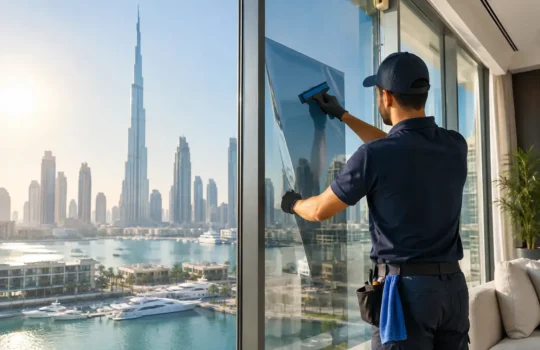

A west-facing living room can look perfect at 9 a.m. and become the least usable space in the house by mid-afternoon. The AC may be running, yet the sofa, floor, and glass still radiate heat. Effective residential heat control starts with identifying what is entering through the glazing, rather than assuming every hot room needs darker windows.
In Dubai homes, large windows and sliding doors bring valuable daylight, views, and an open feel. They also admit solar energy, glare, ultraviolet light, and heat that can place extra demand on cooling. Window film can make a meaningful difference, but only when the film is chosen for the glass, orientation, room use, and desired appearance.
What Causes Heat Buildup Behind Glass?
Sunlight carries visible light, ultraviolet radiation, and infrared energy. Once that energy passes through a window and reaches indoor surfaces, much of it becomes heat. Dark flooring, furniture, and walls can absorb it, making the room feel uncomfortable even when the thermostat setting has not changed.
The effect is not identical across a property. A bedroom facing morning sun may mainly need glare control. A double-height family room with afternoon exposure may need the strongest practical solar reduction. Waterfront homes can have a different issue: strong reflected light from water, neighboring glass, or pale paving can create glare from more than one direction.
Glass itself also matters. A standard single-pane window, insulated glass unit, tempered pane, laminated pane, and coated double glazing do not respond in the same way. That is why a site assessment should come before a recommendation, particularly on villas with extensive or specialty glazing.
The Window Film Measurements That Matter
Film specifications can be confusing because a high number in one category does not always mean the best overall heat solution. Looking at the right measurements makes comparison more useful.
TSER: the broader heat figure
Total Solar Energy Rejected, usually shortened to TSER, describes the proportion of total solar energy the glass-and-film system rejects. It considers more than infrared alone, including visible and ultraviolet portions of sunlight. For homeowners trying to reduce heat through windows, TSER is generally one of the most useful figures to discuss.
A higher TSER can mean less solar heat entering the room, but the result still depends on the size and orientation of the glazing, the existing glass, outdoor temperature, and how the room is used. It is a performance measure, not a promise that every room will feel equally cooler.
Infrared rejection: useful, but not the whole story
Infrared rejection is often highlighted because infrared contributes to the warming effect of sunlight. It can be a helpful specification, especially in premium ceramic films, but it needs context. Some infrared figures refer to a narrow wavelength range rather than the full solar spectrum.
For that reason, a very high infrared rejection percentage should not be treated as the same thing as total solar heat rejection. When comparing options, ask how the film performs as a complete solar-control product and what its TSER is on your specific glass type.
Visible light transmission and glare
Visible Light Transmission, or VLT, is the percentage of visible light that passes through the filmed glass. A lower VLT usually means a darker appearance and greater glare reduction. This can work well for intensely sunlit lounge areas, media rooms, or bedrooms where brightness is the main complaint.
The trade-off is obvious on cloudy days, in shaded rooms, or after sunset: darker film reduces daylight as well. A lighter ceramic or spectrally selective film may preserve a brighter, more natural interior while still reducing a significant amount of solar energy. The right choice is rarely the darkest available film.
UV protection and fading
Quality window films can block a very high proportion of ultraviolet radiation, which helps reduce UV exposure near windows and can support protection of furnishings, flooring, art, and fabrics. However, fading is not caused by UV alone. Visible light, heat, material quality, and direct exposure time also contribute.
Film should therefore be viewed as one practical layer of protection, not a guarantee that fabrics or finishes will never change color. For valuable interiors, the best approach is to consider the location of the item as well as the window treatment.
Choosing Residential Heat Control by Room
A whole-house approach is not always necessary. Applying film only to the most exposed elevations can be a sensible and cost-effective solution, especially where certain rooms receive severe afternoon sun and others remain comfortable.
For a living room with large garden-facing doors, the priority is often a balance of heat reduction, view retention, and natural light. A neutral solar-control film may be appropriate if homeowners want the glass to look understated from both inside and outside. If glare makes television viewing difficult, a slightly lower VLT may be worth considering.
Bedrooms often have different priorities. Heat reduction matters, but privacy can be equally important. Reflective or tinted films can provide daytime privacy when exterior conditions are brighter than the interior. At night, the effect reverses once indoor lights are on. Window film does not create dependable nighttime privacy by itself, so this limitation should be clear before installation.
Kitchens, home offices, and study spaces can benefit from glare control as much as temperature improvement. Screen glare and harsh light on work surfaces may justify a moderate film even if the room is not the hottest area in the home. In a home office, preserving enough daylight for comfortable work is usually more valuable than selecting an aggressively dark tint.
Glass Compatibility Comes Before Film Choice
Not every film is suitable for every pane. Solar-control film changes how a window absorbs and reflects heat, which can increase thermal stress in some types of glass. Existing cracks, edge damage, seals, coatings, unusual shapes, and prior treatments can also affect suitability.
This does not mean residential window film is inherently risky. It means the installer should identify the glass construction and assess the application properly before work begins. On some insulated units, a lighter film or a different film construction may be the safer recommendation. On certain specialty or coated glass systems, the best option may be more limited than a homeowner expects.
A professional assessment also considers access. High-level glazing, tight furniture layouts, skylights, and external installation requirements can affect both installation method and project scope. Clear information at the survey stage helps avoid surprises on installation day.
What a Sensible Assessment Looks Like
A useful consultation begins with the problem, not the product tier. Which rooms become uncomfortable? At what time? Is the concern heat, glare, UV exposure, privacy, or all four? Does the homeowner want the glass to remain almost clear, or is a subtle tint acceptable?
At Dr SunShield, film options can be discussed alongside a live solar transmission meter demonstration where appropriate. This can help show differences in transmitted light and solar energy between samples. It is valuable evidence, but it is not a direct prediction of a room’s final temperature. The actual indoor result also depends on the window area, building insulation, air conditioning, curtains, ventilation, and ongoing sun exposure.
The installer should inspect the glazing, explain the visible appearance from inside and outside, and set realistic expectations for daytime privacy and heat reduction. A transparent quotation should specify the agreed application rather than relying on vague terms such as “premium tint.”
Installation and Aftercare in an Occupied Home
Residential film installation is typically carried out from the interior side of the glass, minimizing disruption to exterior finishes and access requirements. Furniture may need to be moved back from the windows, and installers need a clean, workable area around each pane. Water is used during installation, so sensible protection and careful preparation matter around timber floors, electronics, and soft furnishings.
After installation, small water pockets or a slightly hazy appearance can be part of the normal curing process. This usually clears as moisture evaporates, with curing time affected by film type, glass, humidity, and sun exposure. Avoid cleaning immediately or using abrasive materials. Once cured, a soft cloth and suitable non-abrasive cleaner are the sensible choice.
The best residential heat-control project is often not the darkest film or the most expensive option. It is the film that addresses the difficult rooms, remains compatible with the glass, and leaves the home feeling bright enough to enjoy. Start with the windows that make the house uncomfortable, then choose a solution based on measured performance and the way you actually live in the space.