A weak signal on Sheikh Zayed Road or in a glass-heavy villa can make people wonder: does tint affect phone signals? The honest answer is that some tint can, but the effect depends far more on the film construction, the existing glass, and the strength of the signal outside than on how dark the tint looks.
A quality non-metallic ceramic window film is usually chosen when maintaining connectivity matters. Metallic films and certain factory glass coatings are more likely to affect cellular, GPS, radio, and keyless-entry signals. The right approach is to identify the source of the issue before selecting a film, rather than assuming every dark tint will cause a problem.
Does Tint Affect Phone Signals in Cars?
Window film sits between your phone and the nearest cell tower, so it can influence reception. Whether you notice any difference is another question.
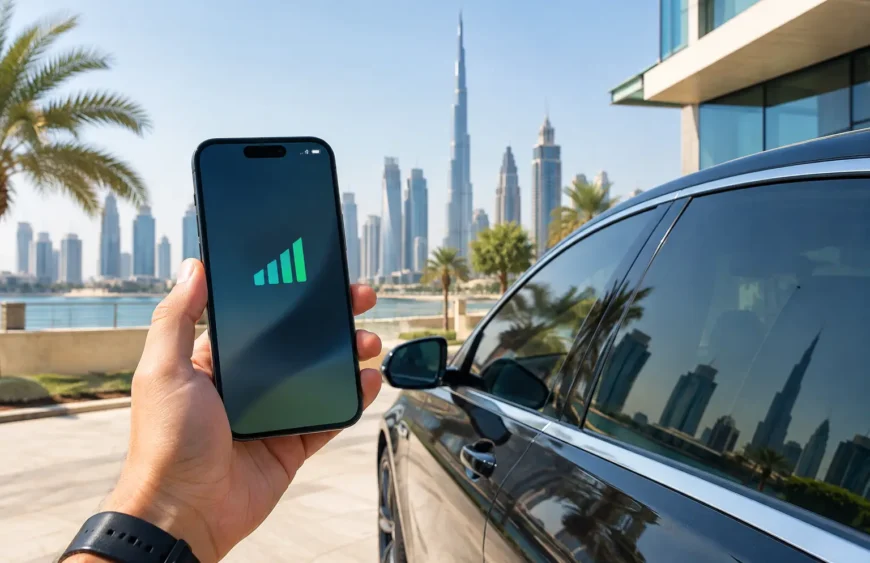
Cellular signals use radio frequencies. Metal reflects and disrupts radio-frequency energy more readily than non-metallic materials. A film containing metallic particles may therefore reduce signal strength, particularly where reception is already marginal. In central Dubai, where outdoor coverage is generally strong, the change may be unnoticeable. On a remote road, inside a parking structure, or in an area with weak coverage, even a small additional reduction can matter.
This is why film type is more relevant than shade. A light metallic film may cause more interference than a darker ceramic film. Visible light transmission, often shortened to VLT, describes how much visible light passes through the glass. It tells us about appearance and daylight, not whether the film will interfere with a phone.
Ceramic tint is generally the safer choice for connectivity
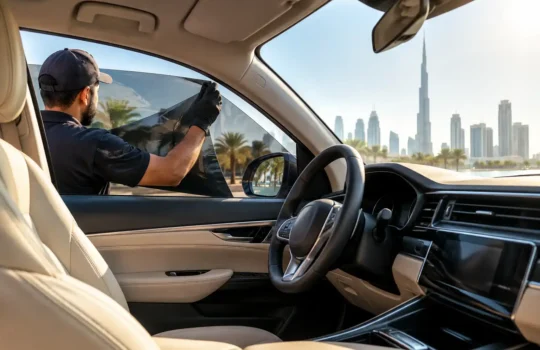
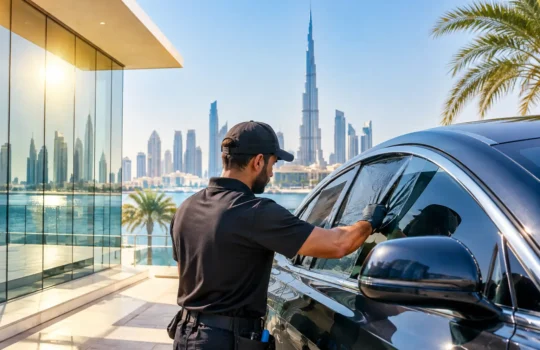
Ceramic films use non-metallic ceramic particles to manage heat and sunlight. They can provide meaningful infrared rejection, glare reduction, UV protection, and privacy without relying on a metal layer. For vehicles, this makes ceramic tint a sensible choice for drivers who use navigation, hands-free calls, Bluetooth accessories, toll tags, or keyless systems.
That does not mean ceramic tint can promise zero effect in every vehicle and every location. Glass, vehicle body panels, roof construction, antenna placement, and network conditions all play a part. It means ceramic film avoids the most common tint-related cause of radio-frequency interference: metal.
GPS, Bluetooth, and mobile data may behave differently
A phone does not rely on one signal alone. GPS receives weak satellite signals, while mobile data and calls rely on cellular networks. Bluetooth works over a short range, typically between your phone and the vehicle system or another nearby device. NFC works only at very close range.
A metallic windshield film can be more noticeable for GPS because satellite signals are relatively weak by the time they reach the vehicle. Cellular reception may also drop in fringe-coverage areas. Bluetooth and NFC are usually less of a concern because their distances are much shorter, although a particular vehicle layout can create exceptions.
Modern vehicles may also have antennas embedded in the glass, rear window, mirrors, or bodywork. If an antenna is integrated into a window, the film selection and installation area deserve extra attention. A professional installer should ask about built-in antennas, sensors, heated glass, and electronic systems before recommending a film.
Building Window Film and Phone Reception
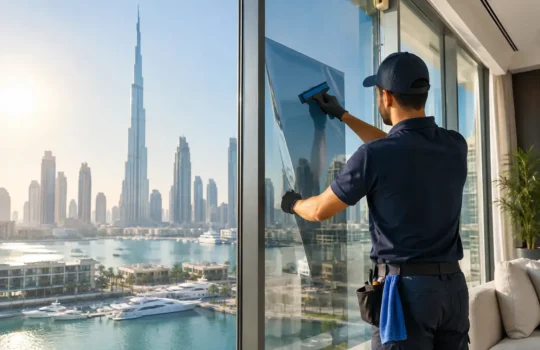
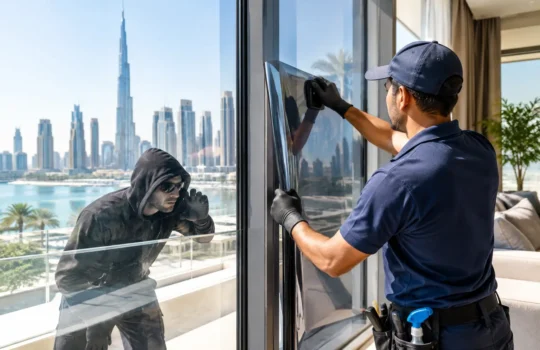
The same principle applies to villas, offices, and apartments, but building glass adds another layer of complexity. A large office façade may already contain low-emissivity, or Low-E, glass. Low-E coatings are designed to improve thermal performance, and some types include metallic layers. These coatings can reduce radio-frequency transmission before any window film is installed.
Adding a metal-based solar-control film to coated glass can compound the effect. It may not create a problem where the external signal is excellent, but it can make an existing indoor dead zone more frustrating. This is especially relevant in rooms surrounded by floor-to-ceiling glazing, internal areas away from exterior walls, and properties where mobile reception was inconsistent before the film was considered.
Non-metallic architectural films are often the more cautious choice where signal performance is a known priority. They can still reduce heat, glare, and UV exposure, but the actual result depends on the glass type, film specification, window orientation, and the amount of direct sun the space receives.
Heat performance and connectivity are separate questions
It is easy to see a high infrared-rejection figure and assume the film must be heavily metallic. That is not necessarily true. Infrared rejection measures performance across a specified infrared wavelength range. It is useful information, but it is not the same as total solar energy rejection, or TSER.
TSER describes how much of the sun’s total energy is rejected by the glass-and-film system. It is usually the more practical measure when assessing potential heat reduction in a sun-exposed Dubai room or vehicle. Neither TSER nor infrared rejection alone tells you how the film will affect phone reception. Film construction is the key detail.
When Tint Is Not the Real Cause
Before blaming the tint, consider whether the reception problem occurs in the same place without it. A phone may struggle indoors because of reinforced concrete, basement parking, building layout, neighboring structures, or the mobile network itself. In a vehicle, the issue may be limited to a specific route or may have started after a software, SIM, or carrier change rather than after tint installation.
There is also a difference between poor signal and poor call quality. A phone with a low battery, a congested network, or a weak in-car Bluetooth connection can appear to have a reception issue. Testing with another phone on a different network can help separate a building or vehicle issue from a handset issue.
For property owners, it is sensible to test mobile signal and GPS in the affected rooms before work begins. If reception is already weak, say so during the consultation. This allows the installer to recommend an appropriate non-metallic option or identify areas where a different solution may be more suitable.
How to Choose Window Film Without Unwanted Interference
Start with the actual problem you want to solve. If cabin heat is the main concern, ask for a non-metallic ceramic automotive tint with the shade and heat performance that suit your driving conditions. If the issue is afternoon glare in a villa or office, assess the glass, façade direction, daylight needs, and existing indoor reception before selecting an architectural film.
Ask directly whether the proposed film contains metal and whether your glass has a factory coating. This is more useful than asking whether the tint is dark. For a vehicle, mention any windshield-mounted devices, navigation issues, embedded antennas, and electronic toll tags. For a building, identify rooms where staff or family members already lose calls or mobile data.
A sample demonstration can help compare visible light transmission and solar performance, but it has limits. A solar transmission meter may show how a glass-and-film sample handles light and heat-related energy. It does not prove signal performance inside your specific vehicle or building. That requires a practical assessment of the installation and surrounding network conditions.
A Practical Recommendation for UAE Conditions
In the UAE, window tint is often selected for comfort first. Strong sun can make a parked vehicle unpleasant within minutes, while unshaded glazing can create hot spots, screen glare, and uneven comfort in homes and offices. Those are valid reasons to use window film, but connectivity should be considered where reception is already weak.
For most customers concerned about phones, GPS, and daily vehicle electronics, a quality non-metallic ceramic film is the sensible starting point. For villas and offices, the recommendation should follow a proper review of the existing glass and the room’s purpose. A meeting room with unreliable mobile service may need a different film choice than a sun-facing living area with strong reception.
The useful question is not simply whether tint affects signals. It is whether a particular film, on your particular glass, is an acceptable trade-off for the heat, glare, privacy, and comfort you want. A careful assessment before installation is far easier than trying to diagnose a signal concern afterward.