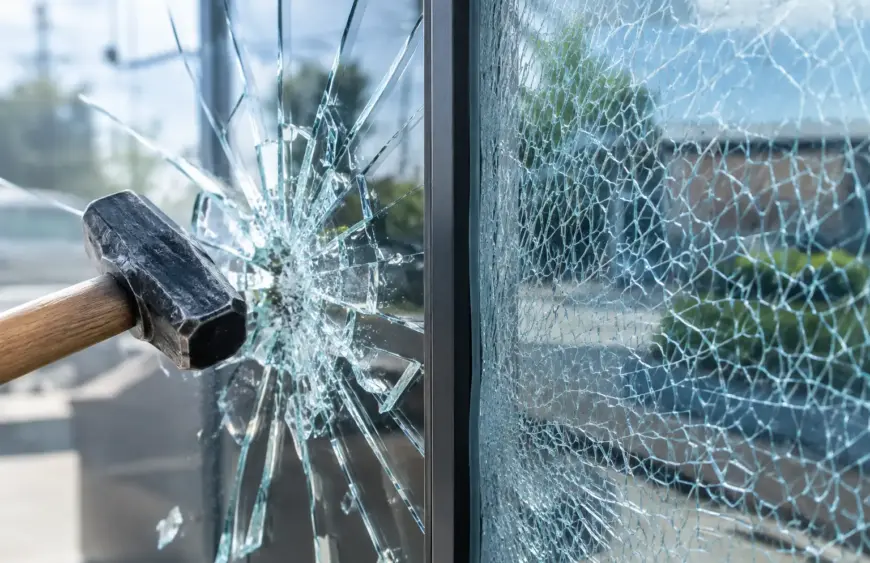
A shattered window is not only a replacement problem. In a villa, office, storefront, or yacht cabin, loose glass can spread across floors, furniture, and people nearby. So, can security film stop shards? In many situations, yes: properly selected safety film can help hold broken glass together after impact, reducing the dangerous scatter of fragments. But the useful answer is more specific than a simple yes.
Security film is designed to improve glass retention. It does not turn ordinary glass into an unbreakable barrier, and it should not be presented as a substitute for purpose-built laminated or blast-rated glazing where those systems are required. The result depends on the existing glass, the type of incident, the film thickness and adhesive, the frame, and how carefully the installation is completed.
What security film does when glass breaks
Safety and security film is a clear, multi-layer polyester film bonded to the glass with a strong adhesive. When the pane cracks or breaks, the film helps keep fragments connected as a sheet instead of allowing them to fall freely into the room.
That can make a meaningful difference after accidental impact, attempted forced entry, severe weather debris, or pressure events. Rather than shards immediately separating and scattering, the broken pane may remain in place temporarily or fall as larger, film-held sections. This can reduce the risk of cuts and make cleanup more controlled.
The word “temporarily” matters. Once glass has broken, the opening is compromised. The area should be secured and the glazing repaired as soon as practical. Film is a risk-reduction measure, not permission to leave damaged glass in service.
Can security film stop shards in every type of glass?
Not in exactly the same way. The starting glass affects both the break pattern and what a film can realistically achieve.
Standard annealed glass
Annealed glass commonly breaks into sharp, irregular pieces. This is where security film often provides the most visible shard-retention benefit, because it can hold many of those pieces together after the pane fractures.
For older villa windows, internal partitions, office sidelights, and certain shopfront applications, this may be a practical way to improve post-breakage safety without replacing every pane. The glass still breaks under sufficient force, but its fragments are less likely to become loose hazards immediately.
Tempered glass
Tempered glass is made to break into small, pebble-like pieces rather than large sharp shards. It is safer by design, but it can still collapse quickly when broken. Depending on the film system and the glass condition, film may help retain some or much of the broken glass. However, the result can be less predictable than with annealed glass because tempered glass releases stored energy rapidly when it fails.
This is one reason an installer should inspect the glass rather than recommend a generic film thickness over the phone.
Laminated glass
Laminated glass already contains an interlayer that holds glass together after breakage. It is generally the more appropriate base specification when a project needs a defined level of forced-entry resistance, overhead-glazing safety, or tested blast mitigation.
Adding film to laminated glass can sometimes serve another purpose, such as solar control, glare reduction, privacy, or an additional retention layer. But it should not be assumed to create a particular security rating without evaluating the full glass-and-frame assembly.
Shard retention is not the same as intrusion prevention
A common misunderstanding is that security film makes a window impossible to break into. It does not. A determined intruder may still break the glass, particularly if the frame is weak or the film is not mechanically retained at the edges.
What a suitable security film can do is make entry slower, noisier, and more difficult by keeping the broken glass attached together for longer. That added delay may be valuable, but it is different from a tested burglary-resistant window system.
The same distinction applies to explosion protection. A film can help reduce hazardous glass fallout from pressure events, but blast performance is about the complete system: glass type, film construction, frame condition, anchoring, opening size, and the expected threat level. For high-consequence sites, a specific engineered assessment and tested system are the right route.
Why the frame and edges matter
Film is bonded to the glass, not automatically to the window frame. After a severe impact, a film-covered pane can remain intact in the frame, pull away at the edges, or release as a larger sheet. Which outcome occurs depends heavily on the glazing system and impact force.
For applications where stronger retention is the objective, attachment methods that connect the filmed glass to the frame may be considered. These details are especially relevant for large panes, glass close to occupied areas, vulnerable entrances, and projects concerned with pressure-related glass hazards.
This is also why applying a thick film alone is not a complete technical answer. A good recommendation considers the glass size, frame material, bead and gasket condition, accessibility, and whether the film is being asked to address accidental breakage, security delay, or a higher-risk safety concern.
Where security film is a sensible option
Security film is often worth considering where replacement glazing would be disruptive or unnecessary, but broken-glass containment would improve safety. In UAE properties, that can include street-facing commercial glass, villa doors and sidelights, office partitions, ground-floor windows, school or hospitality areas, and selected marine-glazing applications.
It can also be useful where a property owner wants a discreet solution. Most clear safety films preserve the existing appearance of the glass, unlike bars or other visibly defensive measures. If heat and glare are also concerns, it may be possible to evaluate a solar-control safety film, although the final choice must be compatible with the glass and its exposure.
A darker solar film is not automatically a safety film, and a thick safety film is not automatically the best solar-control choice. Each product is designed around its own performance priorities.
The installation details that affect performance
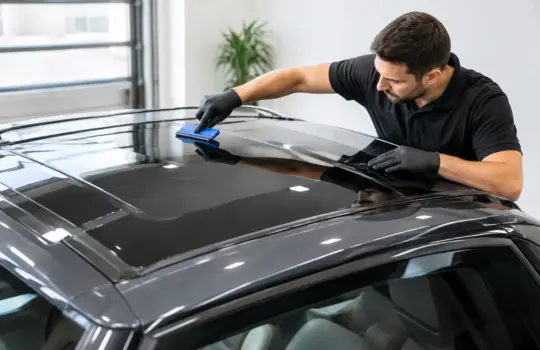
Security film needs more than a clean-looking finish. Surface preparation is central to adhesion. The glass must be inspected for chips, cracks, failed seals, contamination, old adhesive, and coatings that could affect bonding. Edges also need careful finishing because poor edge work can allow lifting over time.
The film requires curing time before it reaches its normal adhesion strength. During that period, moisture haze or small water pockets can be part of the drying process, depending on the film and conditions. A responsible installer should explain aftercare clearly rather than promise an instant final result.
Glass compatibility also deserves attention. Some solar-control films can increase thermal stress in certain panes, especially where there is partial shade, dark framing, existing damage, or insulated glass units with specific coatings. This does not mean film is unsuitable. It means the film should be selected after assessing the glass, orientation, and intended outcome.
Questions to ask before choosing a film
Before approving a safety-film installation, ask what type of glass you have and what risk you are trying to reduce. Is the priority preventing loose shards after accidental breakage? Delaying entry at a ground-floor door? Reducing fallout near occupied areas? Or meeting a defined project safety requirement?
Then ask whether the recommendation includes an assessment of the frame and whether an edge-attachment system is relevant. Request a clear explanation of what the proposed film is expected to do and, just as importantly, what it cannot guarantee.
At Dr SunShield, that discussion starts with the actual glazing and use case, not a one-size-fits-all product pitch. For homes, offices, and specialty glass across the UAE, the right film is the one that addresses the realistic hazard while preserving the appearance and function of the glass.
If broken glass is the concern, safety film can be a practical layer of protection. Just make the decision based on the whole window system, not the film label alone.