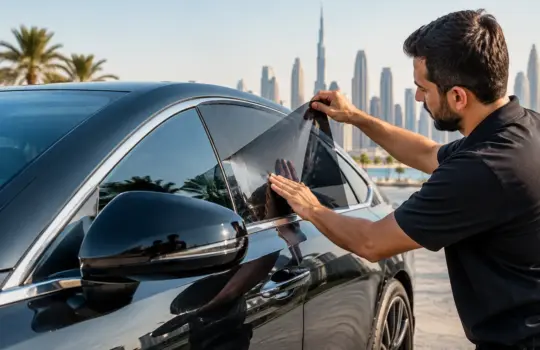
A panoramic roof can make a cabin feel open and premium, but under UAE sun it can also become the largest source of overhead heat and glare. Knowing how to tint panoramic roofs starts with more than choosing the darkest film. The roof glass, factory coatings, sunshade, vehicle electronics, local rules, and the result you expect all need to be assessed before anything is installed.
For many drivers, the right answer is a high-performance ceramic film that looks relatively light from inside the car. For others, the factory glass and built-in shade already provide enough comfort, or a roof application may not be suitable for the vehicle. A proper recommendation should be based on the actual glass and how you use the car, not a one-size-fits-all tint percentage.
Why panoramic roofs feel hotter than side windows
Panoramic roof glass sits directly above the occupants, where the sun is strongest for much of the day. Even when the glass looks dark from outside, it may still allow significant solar energy to enter the cabin. That energy warms seats, trim, and the air inside the vehicle. Once those surfaces heat up, the air conditioning has to work harder to bring the cabin back down to a comfortable temperature.
Glare is another issue. A bright roof can be distracting for rear passengers and uncomfortable for drivers, particularly when the sun is low. The factory retractable shade helps, but it does not stop the heat from reaching the glass first. It mainly blocks light after solar energy has already built up at the roof.
Many modern panoramic roofs already filter a high percentage of ultraviolet radiation. That is useful, but UV rejection alone does not tell you how well the glass handles infrared heat or visible glare. These are separate measurements. A film should be selected for the problem you actually notice: heat, glare, privacy, fading protection, or a combination of all four.
How to tint panoramic roofs safely
The safest approach is to install automotive-grade film on the interior surface of compatible roof glass. Exterior roof film may seem tempting, especially on fixed glass panels, but it faces constant abrasion from dust, washing, weather, and wiper-free cleaning methods that may not be appropriate for film. Interior installation is usually better protected and gives a cleaner long-term finish when the right product is used.
Before installation, an experienced technician should identify whether the roof is fixed, sliding, or part of a multi-panel system. They should also inspect the glass edges, ceramic frit borders, seals, headliner access, and any nearby sensors or wiring. Panoramic roofs vary widely between manufacturers. The same method should not be assumed suitable for every vehicle.
The glass itself matters. Automotive roof panels may be laminated, tempered, coated, heated, or built with solar-control layers from the factory. Applying film changes how the glass absorbs and reflects solar energy. In some cases, especially with certain dark films or sensitive glass constructions, that added absorption can increase thermal stress. This does not mean panoramic roof tinting is inherently unsafe. It means film selection must be matched to the specific glass rather than chosen only for appearance.
A careful installer also controls moisture during application. Window-film installation uses a slip solution to position the film, but roof areas may sit close to switches, wiring, lights, headliner materials, and moving sunshade mechanisms. Proper preparation, controlled solution use, and edge finishing reduce unnecessary risk. A rushed installation that leaves moisture around trim or allows film to interfere with moving parts is not acceptable work.
Check manufacturer and warranty considerations first
If your vehicle is new or still under a manufacturer warranty, ask whether aftermarket film on the panoramic roof affects coverage related to the glass, seals, electronics, or roof mechanism. Policies differ by manufacturer and dealer. A professional installer should be clear about what their film warranty covers and what it does not.
Film warranties generally address issues such as bubbling, peeling, delamination, fading, or color change under normal use. They do not replace a vehicle manufacturer warranty or cover pre-existing defects, impact damage, faulty roof mechanisms, or damage caused by improper cleaning. Clear boundaries are part of a good installation, not fine print to avoid.
Choose performance before darkness
A common mistake is assuming a darker panoramic roof film will always feel cooler. Darkness primarily describes visible light transmission. It can reduce brightness, but it is not the full story on solar control.
Ceramic films are often a strong option for panoramic roofs because they can reject substantial infrared heat while maintaining a lighter, more natural cabin appearance. This matters if you enjoy the open feel of the roof but want less heat on your head and shoulders. A medium or light ceramic film may provide a better balance than a very dark dyed film that makes the interior feel closed in.
When comparing options, ask about visible light transmission, infrared rejection, total solar energy rejection, UV rejection, and the warranty period. Each figure describes something different. A strong infrared number can be useful, but it should not be presented as the only measure of overall heat control. Total solar energy rejection is often a more meaningful indicator of how the complete film-and-glass system manages solar load.
At Dr SunShield, the choice between DS-ONE, DS-PRO, and DS-MAX should come down to the heat problem, desired appearance, and ownership plans for the vehicle. A customer who keeps a car for several years and drives daily under direct sun may value a higher-performance tier and longer warranty. Someone mainly looking to soften glare may not need the highest specification. The right film is the one that solves the actual problem.
A live meter demonstration can help, with limits
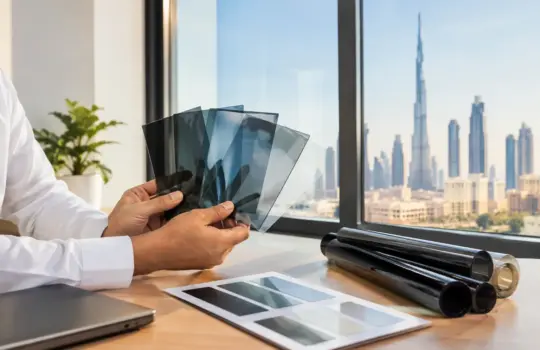
A solar meter demonstration can make film differences easier to see before installation. It can show comparative transmission readings through a film sample and help explain why two films with a similar shade may perform differently.
However, a meter reading is not a guarantee of cabin temperature, air-conditioning performance, or a specific fuel or battery-saving figure. Actual comfort also depends on the vehicle’s glass area, cabin color, parking orientation, sunshade use, outside temperature, and how long the vehicle has been sitting in direct sun. A useful demonstration informs the decision without overstating what it proves.
Do not ignore visibility and regulations
Panoramic roof tinting is typically less about side-window privacy than front and rear windshield tinting, but regulations still matter. Vehicle tint rules can vary by jurisdiction, vehicle type, and enforcement practice. If you are in Dubai or elsewhere in the UAE, confirm the applicable requirements before selecting a shade.
Practical visibility matters too. A dark roof film can make a vehicle feel more enclosed at night, especially for rear passengers. If the roof has no effective power shade, very dark film may reduce the airy feel that made the panoramic roof attractive in the first place. For this reason, many owners prefer heat-rejecting ceramic film in a moderate shade rather than treating the roof as a privacy glass panel.
What the installation process should look like
A professional panoramic roof installation begins with an inspection and a conversation. The installer should ask whether the concern is midday heat, glare for children in the rear, fading leather, screen reflections, or the appearance of the roof. They should also check for chips, cracks, lifting seals, previous film, and access limitations.
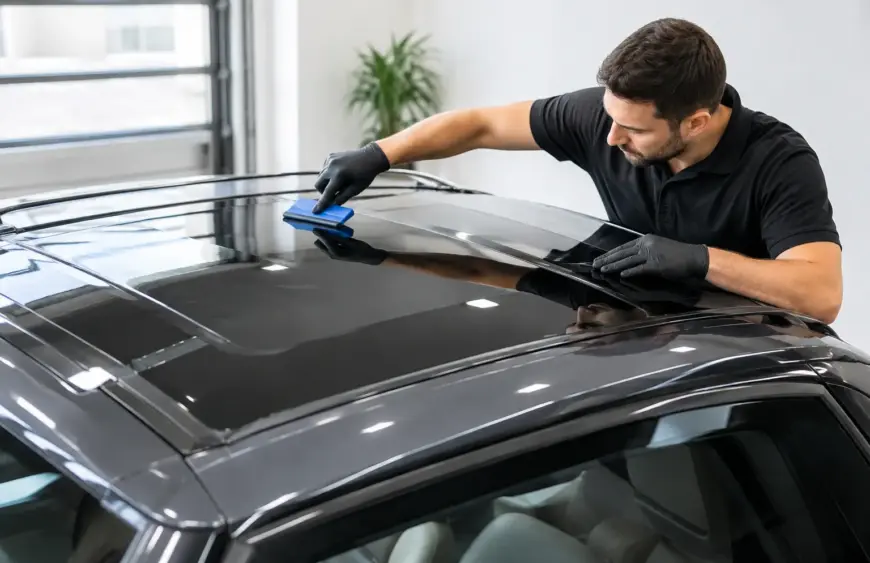
The glass is then cleaned thoroughly to remove dust, oils, silicone residue, and contaminants. A film pattern is cut accurately, positioned on the inside of the glass, and squeegeed carefully to remove installation solution. Edges should be finished neatly without forcing film into seals or against moving components.
After installation, some light haze or small moisture pockets can be normal while the film cures. Cure time depends on temperature, humidity, and film type. Do not judge the final clarity immediately after installation, and avoid aggressive cleaning while the film is settling. Your installer should give you specific aftercare guidance rather than a vague instruction to “wait a few days.”
When roof tinting may not be the best answer
Tinting is not always the first or only solution. If the main complaint is heat while parked, a reflective windshield sunshade can make a major difference because the windshield is often the largest direct solar entry point. Keeping the factory roof shade closed when parked also reduces the radiant heat felt by occupants when you return.
If the panoramic glass is cracked, chipped near the edge, leaking, or showing a seal issue, resolve that fault before applying film. Film is not a repair for damaged glass. Likewise, if a vehicle has a known roof-mechanism problem, installation should wait until that issue is diagnosed.
For vehicles with unusually complex roof glass, limited interior access, or uncertain compatibility, the honest answer may be to decline the application or recommend a different approach. That is better than applying a product that looks good on day one but creates avoidable concerns later.
A well-tinted panoramic roof should feel less punishing at midday without making the cabin unnecessarily dark or compromising the roof system. Start with a vehicle-specific assessment, compare film performance beyond shade alone, and choose an installer who is willing to explain both the benefits and the limits before the work begins.