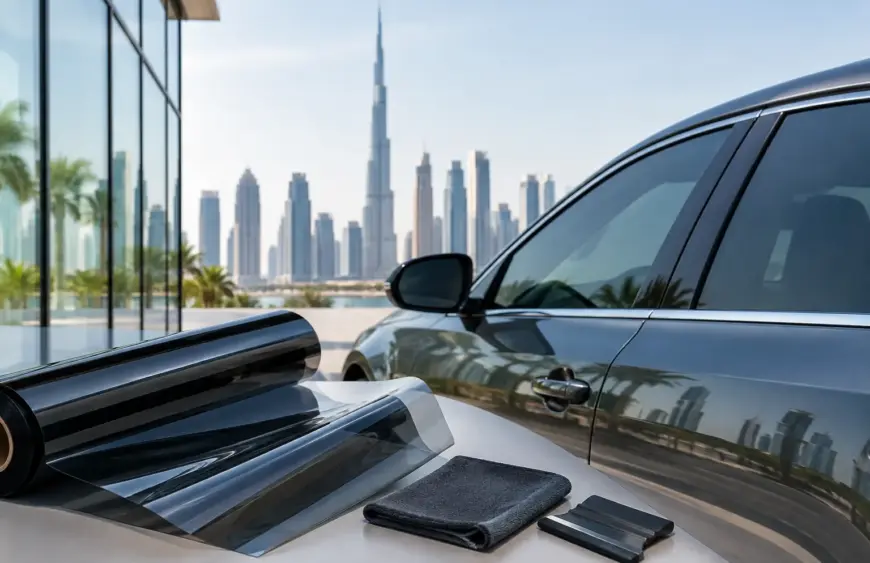
A parked car in Dubai can feel punishing within minutes, while a west-facing villa room can remain bright long after the air conditioning has done its best. This ceramic film guide explains what ceramic window film actually changes, where it delivers the most value, and where a different solution may be the better call.
Ceramic film is often discussed as though it were one product with one result. It is not. The right choice depends on the glass, the direction of sun exposure, the amount of natural light you want to retain, the appearance you can accept, and whether heat, glare, UV exposure, privacy, or safety is the main concern.
What ceramic film is and why it performs differently
Ceramic window film uses non-metallic ceramic particles to manage solar energy passing through glass. Unlike older dyed films, it is designed to reject a greater share of infrared heat without relying on a very dark appearance. Unlike some metallic films, it is less likely to create signal interference and generally gives a more neutral look.
That does not mean every ceramic film will make glass feel cool in every situation. Sun-facing glass still receives a significant solar load, especially on large windows and windshields. Film reduces that load. It does not replace air conditioning, insulated glazing, external shading, or a properly designed building envelope.
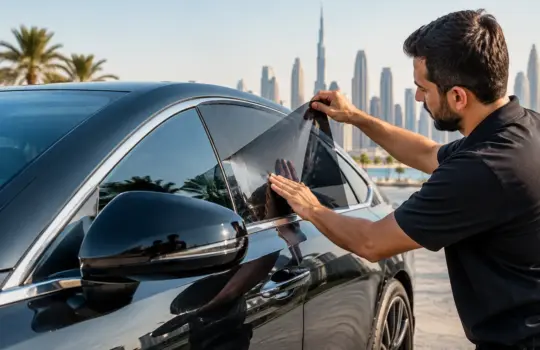
For vehicles, ceramic tint can make daily driving more comfortable by reducing radiant heat and glare while protecting the interior from UV exposure. For villas, offices, storefronts, and yachts, it can reduce harsh sun pressure near windows, improve screen visibility, and help preserve flooring, furnishings, artwork, and upholstery.
The practical advantage is flexibility. A high-quality ceramic film may allow a relatively light shade to reject meaningful heat. That matters when you value visibility, a clean exterior appearance, or a bright interior as much as you value solar control.
The performance terms worth comparing
Film specifications can become confusing quickly because different numbers describe different things. A good recommendation should explain the figures in plain language rather than leading with the largest percentage.
Visible light transmission, usually called VLT, describes how much visible light passes through the glass and film together. Higher VLT means a lighter appearance and better visibility. Lower VLT means a darker look and more privacy, but it may not always deliver proportionally better heat control.
Infrared rejection describes how effectively a film blocks or reflects infrared energy within a stated measurement range. It is useful when comparing films, but the test range matters. A very high infrared figure does not, by itself, describe how the entire glass system will perform under the sun.
Total solar energy rejected is often the more useful broad comparison for solar control because it considers more of the sun’s energy, including visible light, infrared energy, and ultraviolet energy. The final result still depends on the existing glass. Clear single-pane glass, factory-tinted automotive glass, laminated glass, and insulated double-pane units each start from a different point.
UV rejection is another meaningful benefit. Quality film can block the large majority of ultraviolet radiation that contributes to fading and skin exposure. However, fading is also influenced by visible light, heat, material quality, and direct exposure, so no film can guarantee that furnishings will never change color.
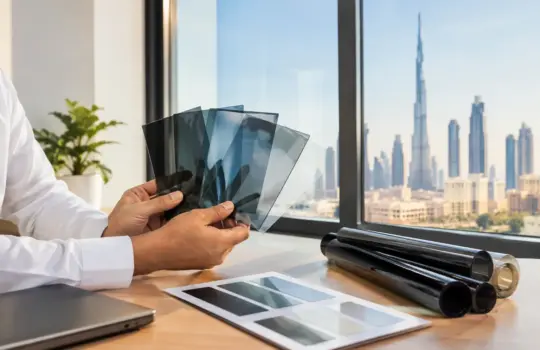
A live solar-meter demonstration can help make differences easier to see. At Dr SunShield, this may be shown with an EDTM SP2065 solar transmission meter where appropriate. It is a useful comparison tool for film samples and glass, not a promise that every room or vehicle will reach a particular temperature. Cabin size, glazing area, sun angle, ventilation, and air-conditioning performance all affect the real-world experience.
Ceramic film guide: choosing by use case
For a vehicle, start with the problem you notice most. If the cabin feels hot while parked or during traffic, prioritize solar and infrared performance. If late-afternoon driving is uncomfortable, glare control may matter just as much. If you want the cleanest possible appearance and strong night visibility, a lighter ceramic shade may be the sensible trade-off.
Darker is not automatically better. A very dark film can improve daytime privacy, but it may reduce visibility at night and may not be appropriate under applicable vehicle tint rules. Before installation, confirm the current requirements for your vehicle and location. A professional installer should be candid if the requested shade or application is not suitable.
For homes and villas, look at each elevation separately. The film that works on a bright west-facing living room may be unnecessary on a shaded bedroom. Large sliding doors, skylights, and rooms with expansive views need a balance between heat reduction and retained daylight. In areas such as Palm Jumeirah, Dubai Hills Estate, or Arabian Ranches, that often means choosing a clear or light ceramic film rather than making all glazing noticeably dark.
For offices and commercial spaces, screen glare often provides the clearest starting point. A film can help make desk areas more usable near perimeter glazing while reducing direct solar discomfort. Yet privacy needs may point to another product. Ceramic solar-control film can limit visibility to a degree depending on the light conditions, but it does not create full on-demand privacy. For meeting rooms, clinics, or glass partitions where privacy must change instantly, switchable Smart Film may be the more appropriate solution.
On yachts, the question is more specialized. Marine glazing can have curved panels, complex edges, different laminate constructions, and constant exposure to heat, salt, and moisture. A film assessment should account for the glazing specification and access conditions before material is selected. The best automotive film is not automatically the right marine solution.
Match the film tier to the actual problem
A tiered ceramic range should give you options rather than pressure you into the highest grade. Dr SunShield’s DS-ONE, DS-PRO, and DS-MAX ranges are structured around increasing infrared heat rejection, with three-, six-, and ten-year warranties respectively.
DS-ONE can suit customers who want a clear upgrade from basic tint, useful glare reduction, UV protection, and dependable everyday performance. DS-PRO is often the practical middle ground when a vehicle or sun-exposed glass receives regular heavy exposure and you want stronger heat management without automatically paying for the top tier. DS-MAX is aimed at customers who place the highest value on infrared performance and longer warranty coverage.
The most expensive film is not always the most rational recommendation. A lightly used vehicle parked indoors may not need the same specification as a daily-driven car that sits outside for hours. Similarly, a north-facing office window may not justify the same film as a large west-facing façade. The right tier is the one that addresses the actual solar exposure and your priorities without compromising the look of the glass.
Installation quality matters as much as the film
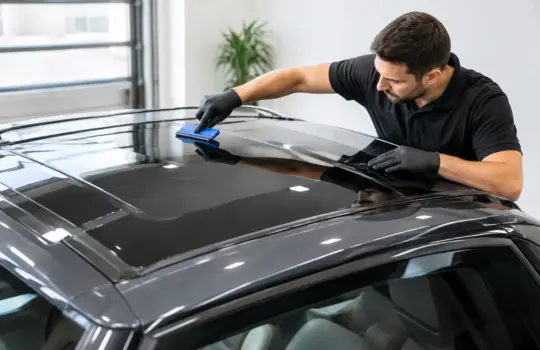
Even premium ceramic film can disappoint when fitted carelessly. Proper installation begins with checking the glass condition, existing films, seals, dot-matrix areas, access, and surrounding surfaces. On property glazing, it also means considering whether the glass type is compatible with the proposed film.
Some glass units require extra caution. Applying solar-control film can change how heat is absorbed and distributed through glass. That can be a concern with certain insulated units, low-emissivity coatings, damaged panes, or glass exposed to uneven shading. A responsible installer should assess thermal-stress risk rather than treating every window as identical.
Surface preparation is equally important. Glass must be cleaned thoroughly, and the working area should be controlled as far as conditions allow. Small particles, old adhesive residue, moisture at edges, or rushed trimming can affect the finish. On vehicles, water used during installation may temporarily appear around seals or window edges. This is normal when managed correctly, but customers should receive clear aftercare guidance before the work begins.
Drying time also varies. Film can look slightly hazy or show small water pockets while its installation solution evaporates. Warm conditions often help curing, but thicker films, humidity, and covered edges can extend the process. Do not judge the final appearance immediately after installation, and avoid rolling down treated windows until the installer confirms it is safe.
Questions to ask before approving a quote
A useful quote should identify the film tier, shade or VLT, intended glass areas, warranty duration, and any preparation or removal work required. For mobile installation, confirm that the location offers sufficient space, shade where needed, clean working conditions, and access to the vehicle or glazing. Not every site is suitable for mobile work, particularly for large property glass or complex yacht applications.
Ask what the warranty covers and what it does not. Film warranties commonly address issues such as peeling, bubbling, cracking, delamination, or abnormal color change under stated conditions. They do not usually cover pre-existing glass defects, impact damage, misuse, or performance expectations outside the product specification.
It is also reasonable to ask for a sample against your own glass. The same film can look different on factory-tinted automotive windows, green architectural glass, and clear laminated panels. Seeing it in place helps avoid surprises about reflectivity, interior brightness, or exterior appearance.
The best ceramic film decision is rarely made from a percentage on a brochure. It comes from looking at the actual glass, the hours of direct sun, the way the space or vehicle is used, and the finish you will still be happy to see every day.