
A sun-facing window can make a beautiful room difficult to use. In Dubai, low morning and afternoon sun can wash out television screens, create reflections on office monitors, and make a vehicle cabin uncomfortable even when the air conditioning is running. The best glare solutions are not always the darkest option. The right choice depends on the glass, the direction of sunlight, the activity near the window, and how much natural light you want to retain.
For most properties and vehicles, professionally selected window film is the most practical starting point because it can reduce glare, heat, and UV exposure without changing the window itself. But film type and shade matter. A solution that works well on a west-facing villa façade may be too dark for an office, unsuitable for certain insulated glass units, or unnecessary for a lightly exposed room.
What Glare Reduction Actually Means
Glare is excessive brightness that makes it harder to see comfortably. It is not simply heat, although the two often arrive together in UAE sunlight. A room may feel cool enough but still be unpleasant because direct sun reflects off a polished floor, desk, television, or laptop screen.
Window film reduces glare by limiting the amount of visible light passing through glass. This figure is usually expressed as visible light transmission, or VLT. A lower VLT means less visible light enters, which generally means stronger glare reduction and a darker appearance from inside and outside.
That trade-off is central to every recommendation. A dark film can be very effective in a bright, highly exposed space, but it may make a north-facing room feel unnecessarily dim. A lighter solar-control film preserves a more open view and daylight while still reducing harsh brightness. There is no single percentage that is right for every window.
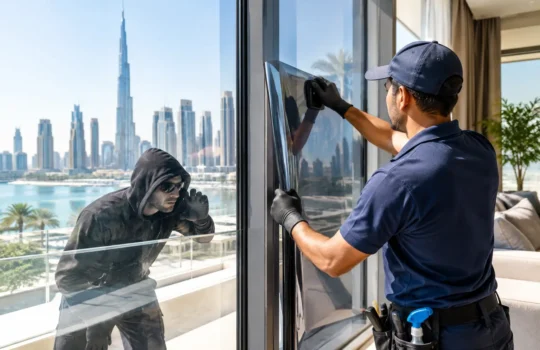
Glare control should also be separated from privacy. Reflective or tinted films can increase daytime privacy when exterior light is stronger than interior light. At night, once indoor lights are on, that effect can reduce or reverse. If privacy is the main concern after dark, the suitable solution may be different from a glare-control film.
Best Glare Solutions by Application
Villas and residential glazing
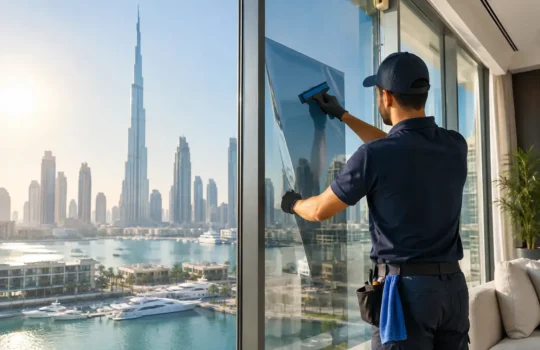
Large windows, sliding doors, skylights, and double-height glazing bring in light and views, but they can create severe glare in living rooms, home offices, and bedrooms. For these applications, solar-control window film is usually the first option to assess.
A neutral or lightly tinted film can take the edge off intense sunlight while keeping interiors bright and natural-looking. Where the sun is direct and persistent, such as a west-facing family room or a waterfront façade, a stronger film may be appropriate. The decision should be based on the orientation, glass area, furnishings, and how the room is used during the hottest and brightest hours.
Heat performance also matters. Total solar energy rejected, often called TSER, measures how much of the sun’s overall energy a film rejects. This includes visible light, infrared energy, and ultraviolet energy. A higher TSER usually supports better solar heat control, but it should not be confused with an infrared rejection figure alone. Some products quote high infrared rejection at a particular wavelength, which does not tell the full story of heat entering through the window.
For villa glazing, glass compatibility must be checked before installation. Applying a film changes how the glass absorbs and rejects solar energy. On some glass types, especially certain insulated units, laminated panels, coated glass, or large exposed panes, an unsuitable film can increase thermal stress. A professional assessment should identify the glass construction and recommend a compatible film rather than selecting a shade from a sample book alone.
Offices and commercial spaces
Office glare is often a productivity problem before it becomes a comfort complaint. Staff move desks away from windows, close meeting-room blinds, or struggle to read screens during specific hours. If the issue affects only a few workstations, the answer may be a carefully selected film on the affected elevation rather than treating every piece of glass.
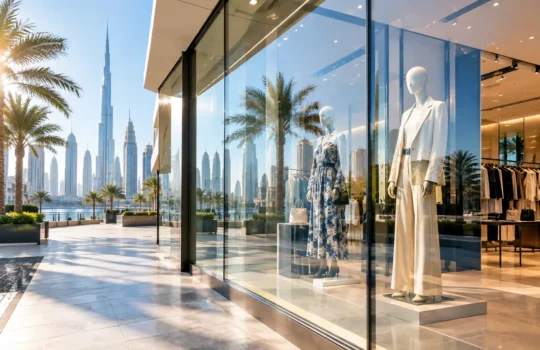
A moderate solar-control film is often a sensible balance for offices because it reduces brightness and screen reflections while preserving useful daylight. Very dark film can reduce glare substantially, but it may alter the look of a workplace, affect views, and increase the need for artificial lighting. For customer-facing spaces, visual appearance and nighttime transparency should be part of the discussion.
Installation planning matters too. Commercial projects may need work completed outside operating hours, in stages, or around access restrictions. Large panes, high-level glazing, and internal partitions can all affect the installation method and quotation.
Automotive glare and cabin comfort
Automotive window tint can reduce side glare, rear glare, and the intensity of sunlight entering the cabin. Ceramic tint is commonly chosen when drivers want strong solar performance without relying on a heavily reflective appearance. It can help improve comfort on long drives and reduce the strain of intense light on passengers in rear seats.
The best automotive tint is not necessarily the darkest legal-looking shade. Visibility, driving conditions, the vehicle’s factory glass, and local tint regulations all need consideration. A shade that looks acceptable on one vehicle can appear much darker on another because factory glass already has a degree of tint. Current UAE requirements should be confirmed before installation.
UV protection is another useful benefit, particularly for frequent drivers. Window film can help limit UV exposure through side and rear glass, but the exact coverage depends on the installed film and which windows are treated. The windshield requires separate consideration because visibility and legal requirements are stricter.
Yachts and marine glazing
On a yacht, glare can affect both comfort and visibility. It may make a saloon uncomfortably bright, reflect off water into the cabin, or interfere with screens and instruments. Marine film selection needs more care than a typical building installation because curved glass, salt exposure, edge conditions, and the vessel’s operating environment all matter.
A suitable marine film can reduce brightness and solar load while retaining the view that makes the space enjoyable. However, navigation areas require particular caution. Any film near helm glazing must be selected with visibility, reflections, and safe operation in mind.
When Solar Film Is Not the Whole Answer
Window film is highly effective for broad daylight glare, but it cannot eliminate every reflection. A television opposite a bright window, for example, may still reflect light from another surface in the room. The angle of the glass, screen placement, glossy finishes, and direct sun path all influence the result.
For a focused problem, a lower-cost and lighter solution may be enough. If glare occurs for only one hour a day in one small area, a light film or localized treatment may make more sense than using a dark film across an entire façade. Conversely, if the room is uncomfortable for much of the afternoon, a more substantial solar-control film may be justified.
Smart Film serves a different need in many projects. Its main value is switchable privacy, changing glass from clear to opaque when activated. It can be useful for meeting rooms, bathrooms, and private interiors, but it should not automatically be treated as a substitute for solar-control film. If heat and sunlight glare are the main issues, performance needs to be assessed separately.
Safety and security film also has a distinct role. It can help hold broken glass together after impact, depending on the system and installation conditions, but it is not primarily a glare solution. Where both safety and solar control are required, the glass and film configuration should be reviewed carefully.
How to Choose the Right Film Shade
The most useful consultation starts with the actual problem, not a preferred shade. Consider when glare occurs, which direction the windows face, whether the issue is direct sunlight or reflected brightness, and how the space is used. A bedroom, a design studio, a boardroom, and a car cabin have different priorities.
Ask to compare visible light transmission alongside TSER, UV protection, and the film’s appearance from both sides of the glass. A performance meter demonstration can help explain solar transmission, but it does not replace a full site assessment. Real-world results still depend on the size and type of glass, installation quality, surrounding surfaces, and changing sunlight conditions.
At Dr SunShield, the practical approach is to recommend the film that addresses the actual glare and heat concern while respecting glass compatibility, natural-light preferences, and the look of the property or vehicle. That may mean a premium ceramic option, a moderate neutral solar film, or a simpler solution where the exposure is limited.
The best result is a space that remains bright enough to enjoy, comfortable enough to use, and clear enough to see through when the sun is at its strongest.