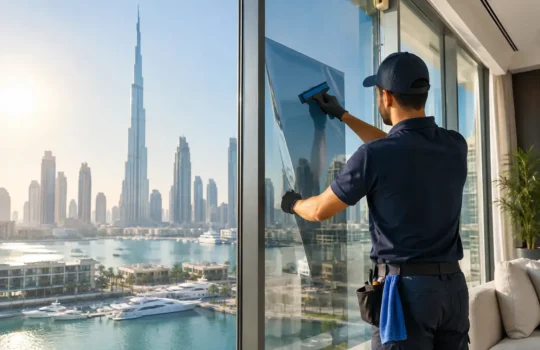
A glass facade can make a villa, office, showroom, or waterfront property feel open and bright. In Dubai, that same glazing can also create hot perimeter rooms, uncomfortable glare, faded interiors, and high cooling demand. The best glass facade solutions are not automatically the darkest film or the highest-priced option. They are the solutions that address the actual issue while respecting the existing glass, daylight needs, appearance, and site conditions.
For many completed buildings, professionally selected window film is the most practical way to improve facade performance without replacing the glazing. It can reduce solar heat, manage glare, filter UV, add privacy, or improve safety characteristics. But film is not one universal product. A suitable recommendation starts with understanding what the glass is doing now and what needs to change.
Start With the Problem, Not the Film Shade
A south- or west-facing villa with floor-to-ceiling glass may need heat reduction without making living areas noticeably dimmer. An office may have reasonable temperatures but persistent screen glare near its windows. A ground-floor meeting room may need daytime privacy, while a retail frontage may need UV protection for displays without changing the exterior look too much.
These are different problems, so they call for different priorities. A darker tint may reduce glare effectively, but it also lowers visible light transmission. Visible light transmission, often shortened to VLT, is the percentage of visible daylight that passes through the glazed window after the film is installed. Lower VLT generally means a darker appearance and less glare, but it can make interiors feel less naturally lit, particularly on shaded elevations or during cloudy conditions.
Before choosing a facade film, establish whether the main concern is solar heat, glare, privacy, fading, safety, or a combination. This prevents a common mistake: selecting a dark film for heat control when a lighter, higher-performing solar-control film may better preserve daylight.
How Solar-Control Facade Film Reduces Heat
Sunlight carries heat in several forms. Infrared is part of the picture, but it is not the entire picture. When assessing solar-control film, total solar energy rejected, or TSER, is usually the more useful number because it reflects how much of the sun’s total heat is kept from entering through the glass.
A high infrared rejection figure can sound impressive, but it may refer to a limited infrared wavelength rather than the full solar spectrum. It should not be treated as the same thing as total heat reduction. In practical terms, a film with strong TSER is generally more relevant when the goal is to reduce solar load through a large glazed facade.
Results still depend on the building. Orientation, window size, external shading, air conditioning settings, interior finishes, and the time of day all affect how a space feels. A west-facing room in Dubai that receives direct afternoon sun will usually see a more noticeable benefit than a north-facing room with little direct exposure.
For properties with large expanses of glass, a specialist should assess the facade elevation and take account of the existing glazing. Where appropriate, a live solar transmission meter demonstration can help compare film samples under the same test conditions. It is useful for illustrating relative performance, but it is not a promise of an exact indoor temperature drop. A room’s final comfort level is influenced by far more than the glass alone.
Best Glass Facade Solutions by Application
Solar-control film for heat and glare
Solar-control window film is often suitable for villas, apartments, offices, and commercial spaces where direct sun makes areas near the glass uncomfortable. Depending on the chosen film, it can reduce solar heat and glare while maintaining a lighter appearance than traditional dark tint.
This category is particularly useful when natural light matters. A family room overlooking a garden or water view, for example, may benefit from a neutral or lightly tinted film that controls solar energy without making the windows look heavily reflective or noticeably dark from inside.
The trade-off is straightforward: the lighter the film, the more careful the performance comparison needs to be. Very light films can still provide useful solar control, but they may not offer the same glare reduction or privacy as a darker option.
Privacy and decorative film for overlooked glass
Privacy is often a separate requirement from heat control. Frosted, patterned, gradient, and decorative films can obscure views through internal partitions, bathrooms, entrance doors, meeting rooms, and street-level glazing while still allowing daylight through.
For exterior glass, privacy works differently in daytime and nighttime conditions. Reflective or tinted films can improve daytime privacy when the exterior is brighter than the interior. At night, once indoor lights are on, the effect can reverse. Anyone considering privacy film should plan for this limitation rather than assume it will provide a one-way view around the clock.
Decorative film is usually the better choice when the goal is visual screening rather than solar performance. It can define zones in an office or add privacy to residential glass without the need for permanent etched glass.
Smart Film for controllable privacy
Switchable Smart Film is suited to spaces where privacy needs to change during the day. When powered, it can appear clear; when switched off, it becomes opaque. It is commonly considered for meeting rooms, clinic partitions, private offices, and selected residential applications.
It solves a different problem than solar-control film. Smart Film is primarily a privacy solution, not a substitute for a dedicated heat-reduction film on a sun-exposed facade. Installation also needs careful planning for electrical connections, panel dimensions, and the condition of the glass. It is best specified early in a fit-out or renovation rather than treated as a last-minute addition.
Safety and security film for risk reduction
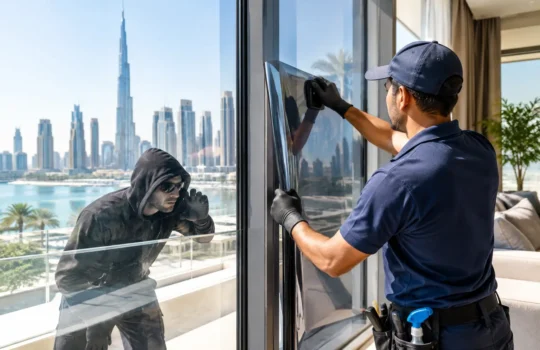
Safety and security window film can help hold broken glass together after impact, reducing the spread of loose shards. It may be appropriate for certain commercial settings, vulnerable glazing, doors, and areas where glass breakage presents a safety concern.
The correct thickness, attachment method, and glass compatibility matter. Security film should not be described as making glass unbreakable. Its role is to improve post-breakage behavior and, in some applications, add delay or retention. The required outcome should be defined before the film is selected.
Glass Compatibility Is Not Optional
Not every film is suitable for every pane. Modern buildings may use tempered, laminated, insulated, coated, low-emissivity, or double-glazed units. Absorptive films can change how heat is distributed within the glass, and an unsuitable combination may increase thermal stress.
That does not mean film cannot be installed on these glass types. It means the glass construction, existing coatings, pane size, edge condition, and exposure should be checked before work begins. A proper assessment is especially relevant for large facade panels, skylights, older glazing, and units that already receive intense direct sun.
Exterior appearance also deserves consideration. Reflective films can be effective for solar control and daytime privacy, but they may alter the look of a building from outside. Residential communities, managed towers, and commercial landlords may have facade rules that affect what can be installed. The practical question is not simply whether a film performs well on a sample. It is whether it suits the building and is permitted on that elevation.
A Practical Selection Process
The most reliable route is to inspect the glass and discuss how the space is used. For an office, that may mean identifying hot desks, screen-facing workstations, and meeting rooms with privacy concerns. For a villa, it may mean looking at afternoon sun, furniture fading, children’s rooms, and the desire to keep views bright.
Sample films should be compared for VLT, glare reduction, appearance, and solar performance. Ask for TSER where heat is the priority, and ask what the stated infrared figure actually represents. For UV protection, understand that quality window films can filter a substantial portion of UV radiation, but they cannot stop fading completely. Heat, visible light, fabric quality, and time also contribute to fading.
Installation conditions matter as well. Clean glass, access, panel size, working height, furniture clearance, and curing time all affect planning. A careful installation team will protect surrounding finishes, prepare the glass thoroughly, and explain what minor moisture haze or curing marks can look like while the film dries.
A facade does not have to remain a source of discomfort just because the glass is already in place. The right film choice can make a sunny room more usable while preserving the daylight, view, and appearance that made the glazing attractive in the first place.