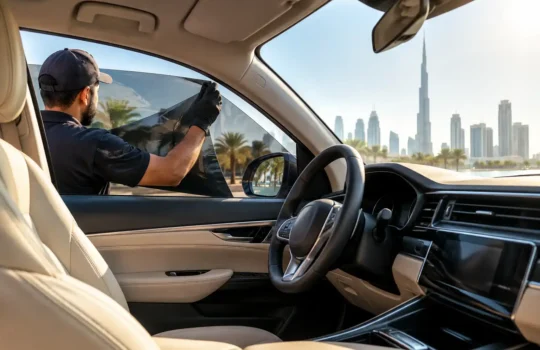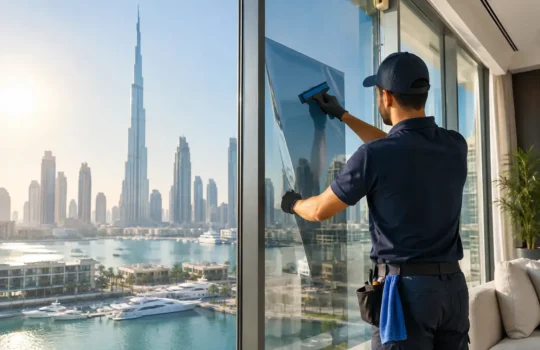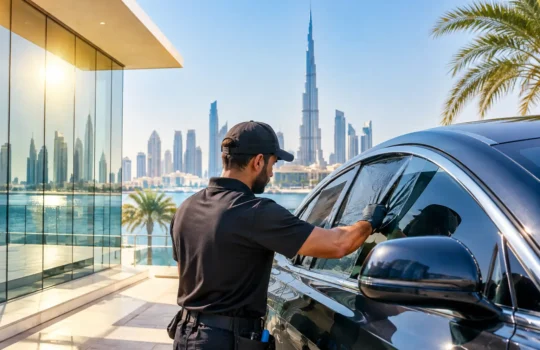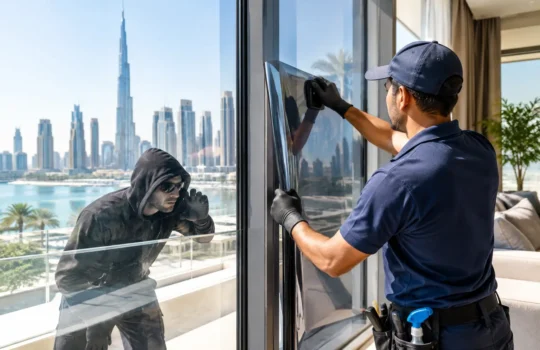
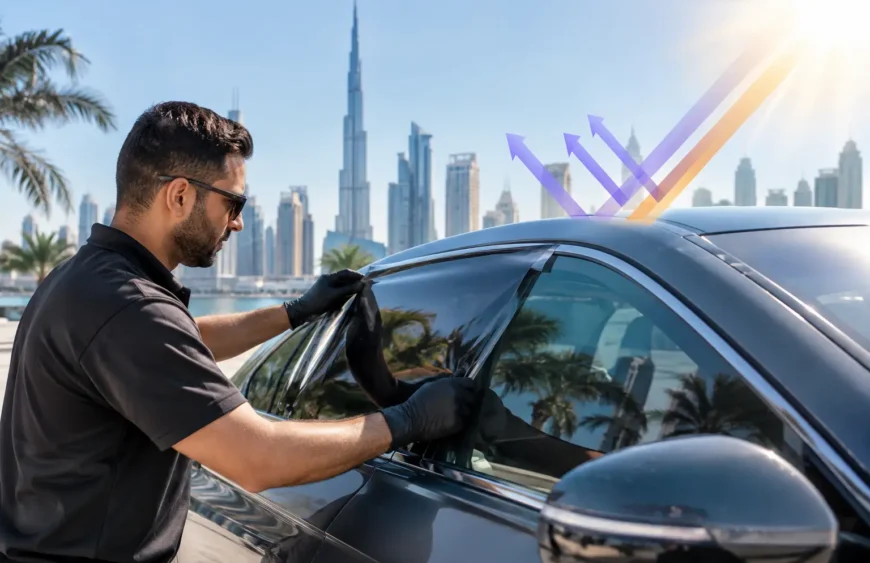
A dark car cabin can still receive ultraviolet exposure, while a nearly clear window film can provide strong UV protection. That is why the question, does tint block ultraviolet rays, cannot be answered by looking at a film’s shade alone. The useful answer is: quality window film can significantly reduce UV transmission, but the actual result depends on the film, the glass, and how the product is specified and installed.
For drivers, homeowners, and facilities teams in Dubai, that distinction matters. Strong sunlight brings heat and glare, but UV is a separate part of the solar spectrum with its own effect on skin and interiors. Choosing tint only because it looks dark can leave the real problem only partly solved.
Does Tint Block Ultraviolet Rays in Every Case?
Most professionally made solar-control and UV-protection films are designed to filter a very high percentage of ultraviolet radiation. A product may commonly be rated to block up to 99% of UV, but that figure should be verified against the film’s actual technical data rather than assumed from its appearance.
Not every tinted material performs alike. Basic dyed tint may make a window look darker and reduce some visible glare, yet its UV performance, heat control, optical clarity, and long-term stability can differ considerably from a quality ceramic or architectural film. Decorative films and privacy films can also vary. Some provide meaningful UV filtering as part of their construction; others are selected primarily for appearance or privacy.
There is another practical limitation: film only protects the glass it covers. In a vehicle, sunlight can enter through an untreated windshield, sunroof, or rear glass. In a villa or office, UV can reach a room through uncovered windows, skylights, doors, or open areas. A proper assessment looks at the full glazed area, not just one pane.
UV Protection Is Not the Same as Heat Rejection
This is one of the most common sources of confusion. UV radiation makes up only a small portion of the solar energy that creates heat inside a car, home, or workplace. Blocking UV can help protect occupants and furnishings, but it does not automatically mean the glass will feel dramatically cooler.
Solar heat enters through several parts of sunlight: ultraviolet, visible light, and infrared energy. It is also affected by the glass itself, the direction of the façade, outdoor temperature, reflected heat from paving or nearby buildings, and how much glazing is exposed.
For heat concerns, ask about total solar energy rejected, usually shortened to TSER. TSER is the more useful overall measure because it considers how much total solar energy the glass-and-film system rejects. A higher TSER generally means less solar heat is admitted, although the practical improvement still depends on the building or vehicle conditions.
Infrared rejection can also be relevant, especially for automotive ceramic tint. However, it needs context. Some products highlight a high infrared-rejection number measured at a particular infrared wavelength. That is not the same measurement as total solar heat rejection and should not be treated as proof of overall cabin or room cooling.
A good recommendation separates the goals clearly. If your priority is fading and UV exposure, high UV protection may be the deciding factor. If a west-facing villa room becomes uncomfortable in the afternoon, TSER, glass compatibility, and visible light transmission usually matter just as much. If computer screens are hard to see, glare reduction may be the immediate priority.
Why Film Shade Does Not Tell the Full Story
Visible light transmission, or VLT, tells you how much visible daylight passes through a window. Lower VLT means a darker appearance. It can improve comfort by reducing brightness and glare, but it is not a reliable shortcut for judging UV protection.
A light ceramic automotive film can have high UV filtering while preserving a more open appearance and better nighttime visibility than a dark film. Similarly, a relatively clear architectural UV film may be appropriate where protecting artwork, flooring, fabrics, or merchandise is the main requirement and the customer does not want to noticeably darken the glass.
Darker film does have practical benefits in the right application. It can reduce visible glare more strongly and provide greater daytime privacy, particularly on vehicle side glass or sun-exposed rooms. The trade-off is less natural light and, in some settings, reduced visibility after dark. Privacy also changes with lighting: a reflective or dark window may offer good daytime privacy when it is brighter outside, but it cannot guarantee privacy at night when interior lighting is stronger.
For vehicles, legal tint limits and safe outward visibility must also be considered. A film should be selected for comfort and protection without creating an unsafe or non-compliant result.
The Glass Matters as Much as the Film
Window film does not perform independently from the glass beneath it. The same film can produce different results on clear glass, factory-tinted automotive glass, laminated glass, double-pane insulated glass units, low-emissivity glass, and marine glazing.
This is particularly important for large villa and commercial windows. Some glass absorbs heat, and adding a solar-control film can change how heat is distributed through the pane. If the glass type, edge condition, frame, shading, or installation history is unsuitable, there can be a thermal-stress risk. That does not mean film is inappropriate, but it does mean a professional should identify the glass construction before recommending a high-absorbing or darker film.
Double-pane units require special care. The wrong film can affect the thermal behavior of the insulated glass system and may have warranty implications. A site review should consider markings on the glass where available, window age, pane configuration, seals, orientation, and the amount of direct sun.
Automotive and yacht glass also have their own considerations. Curved glass, dot-matrix edges, defroster lines, antennas, and electronics can affect installation choices. On yachts, salt exposure, curved glazing, and intense reflected sunlight from the water add another layer of planning.
What UV Protection Can and Cannot Do
UV-filtering film can help reduce the exposure that contributes to fading and material deterioration. It is particularly useful for leather, wood finishes, textiles, flooring, display items, and vehicle interiors. It can also add a layer of protection for people sitting near windows during routine daily exposure.
But it is not a permanent stop to all fading. Visible light and heat can also affect materials, as can the quality of dyes, pigments, finishes, and the length of exposure. A south- or west-facing room with intense direct sun will still need realistic expectations, even with a high-performing film.
Film also cannot correct every comfort issue. If heat is entering through an unshaded roof, open doors, poorly insulated walls, or areas of glass that cannot be filmed, the overall room temperature may still be difficult to manage. The right approach is to identify how much of the problem is coming through the glazing before selecting a film.
How to Choose a Tint for UV, Heat, or Glare
Start with the problem, not the darkness level. For a vehicle, decide whether the main concern is UV exposure, cabin comfort, glare, privacy, or a balance of all four. For a home or office, identify which windows receive the harshest sun, what time the discomfort occurs, whether the room needs daylight, and whether interior items need protection from fading.
Then compare films using the measurements that match that problem. UV rejection is central for UV protection. TSER is more useful for solar heat control. VLT helps set expectations for darkness and daylight. Glare reduction is worth reviewing where screens, driving visibility, or bright waterfront reflections are an issue.
A meter demonstration can be useful when it shows how sample glass and film respond to transmitted solar energy. It should be treated as a comparison tool, not as a promise that a whole room or vehicle will reach a specific temperature. Real-world results depend on the complete glass system, sun angle, area of coverage, and surrounding conditions.
Installation quality matters as well. Clean preparation, correct film handling, careful edge finishing, and proper curing all affect appearance and longevity. For architectural work, a compatibility check before installation is part of doing the job responsibly. Dr SunShield assesses these details so the recommended film matches the glass and the actual concern, rather than simply recommending the darkest or most expensive option.
The best tint is often the one you barely notice after installation: it keeps the view and daylight you value, while reducing the UV, glare, or solar heat that was making the space uncomfortable.